Rye sits on the most exposed stretch of the New Hampshire coast. When a nor’easter comes off the Atlantic, Route 1A takes the brunt of it, and the overhead lines running through the wooded sections along Washington Road, Central Road, and Brackett Road come down with the trees. Summer thunderstorms, fall hurricane remnants, and January ice events all end the same way. If you have lived here more than a couple of winters you already know the pattern.
For most homes in Rye, an outage is not really about the lights. If you are on a private well, no power means no water at all. No showers, no toilets, no way to fill a pot. If your basement sits near the marsh or you have a high water table, no power means no sump pump during exactly the storm that is pushing water at the house. And if you split your year between Rye and somewhere else, the outage you never hear about is the expensive one, because a pipe that freezes in February does not get discovered until you open the door in May. We are based in Somersworth, about twenty five minutes from Rye Harbor, and we install generators along this stretch of coast regularly.
A properly installed standby generator does not just keep the lights on. It keeps running the systems you cannot go a day without, whether you are standing in the kitchen or three states away.
An install a mile off the Atlantic has to be built differently than an install in Rochester. Three things change here.
Fuel planning, not just generator sizing. Rye does not have a built-out natural gas system the way Portsmouth does. Most homes here run on propane, the same as the rural towns we install in like Wolfeboro and Wakefield, which changes the conversation. A 24kW unit under load burns through propane faster than most homeowners expect, so tank size and placement matter as much as the generator itself. We size the tank for the length of outage you actually want to cover, not the minimum that passes inspection, and we plan placement so the delivery truck can reach it in February when the driveway is plowed narrow. If your street is one of the few with a gas main, that is the simpler path and we will tell you.
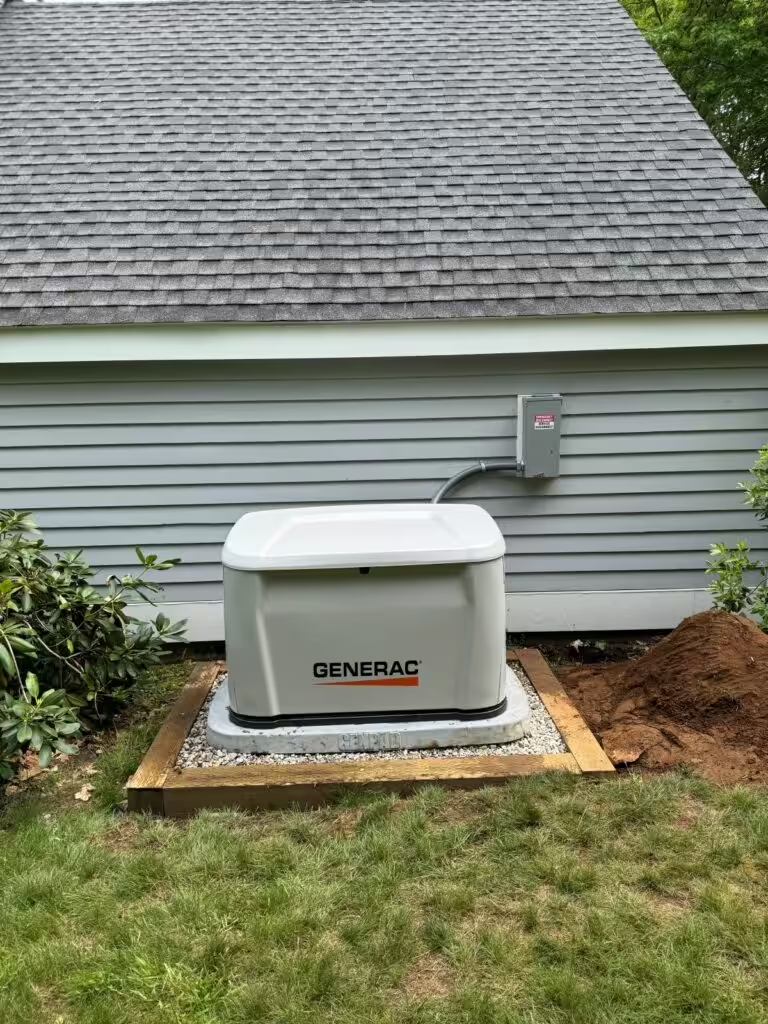
Corrosion-resistant hardware and aluminum enclosures. Salt air is hard on external electrical components. Fasteners, conduit fittings, transfer switch enclosures, and the generator’s own hardware all age faster within a few miles of the water than they do inland. We spec stainless or appropriately coated hardware on Rye installs from the start, and every unit we install goes in with Generac’s aluminum enclosure so it is not fighting corrosion from day one.
A true 10-year warranty, included. Generac’s standard coverage is a 5-year limited warranty, and the word limited is doing real work in that sentence. Not every component is covered for the full five years. The extended 10-year warranty is bumper to bumper with full coverage on the unit, and it requires the aluminum enclosure that we already install as standard. We include it on every generator we install in Rye at no additional cost. That is a dealer thing. An electrician who is not an authorized Generac dealer cannot put it on your unit.
Elevation on flood-exposed sites. A standard install sits on a concrete pad a few inches off the ground. On properties near Route 1A, Awcomin Marsh, or Parsons Creek, that is not enough. We build custom stands that lift the unit to whatever height the site actually requires, whether that is clearing base flood elevation in a designated flood zone, getting above expected storm surge, or simply staying above the windblown spray line during a nor’easter. The height comes from the property, not from a standard bracket.
Load calculations that account for the well pump. A well pump pulls hard on startup, and it is the single load most likely to get missed when a generator is undersized. We run a full load calculation on every Rye install and size around what your house actually needs, including the well, the septic pump if you have one, and any heat pumps or EV chargers already in place.
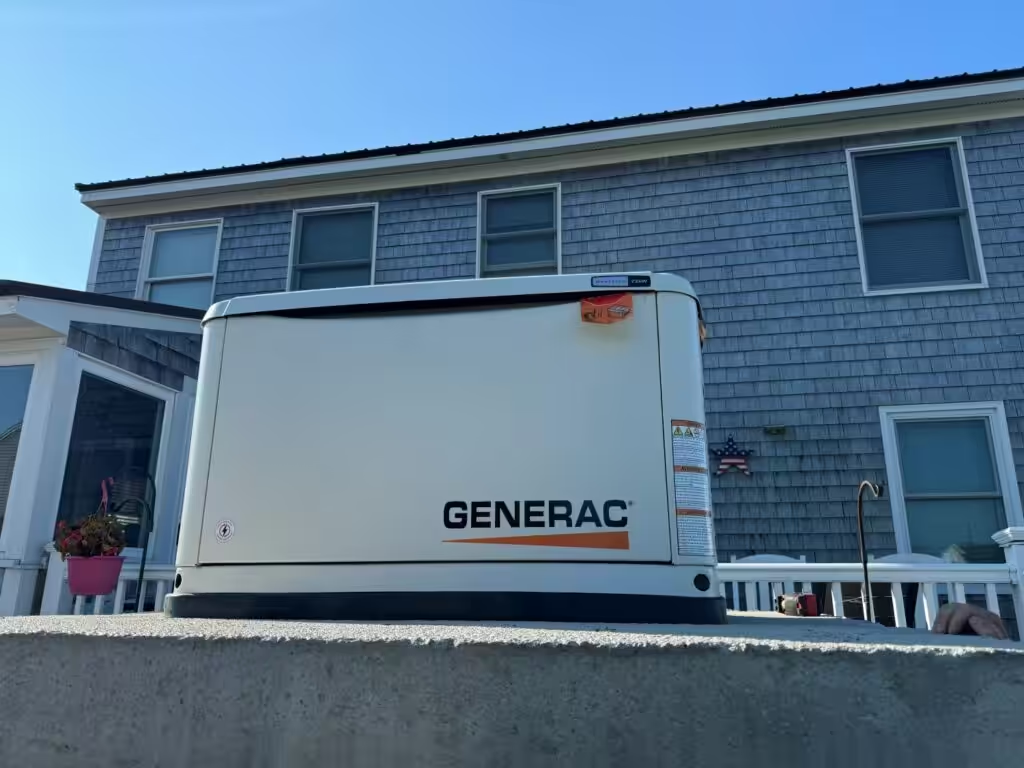
Loyal Lab Electric installed the largest air-cooled generator Generac makes on a Wakefield property in early 2026. A 28kW NextGen unit on a large home with a 400-amp service and multiple sub-panels. You can watch the full installation on YouTube.
In Rye we work on everything from year-round homes along Washington Road and Central Road to properties out on 1A where the ocean sets the terms of the install. Most of them run on propane and many are on private wells, so the job here is as much about fuel planning and load calculation as it is about the generator itself. The fundamentals of a quality install are the same everywhere: right-sized equipment, careful placement, corrosion-resistant hardware where the coast demands it, and monitoring that catches issues before it becomes a problem.
A properly sized standby generator with an automatic transfer switch takes the problem off your plate.
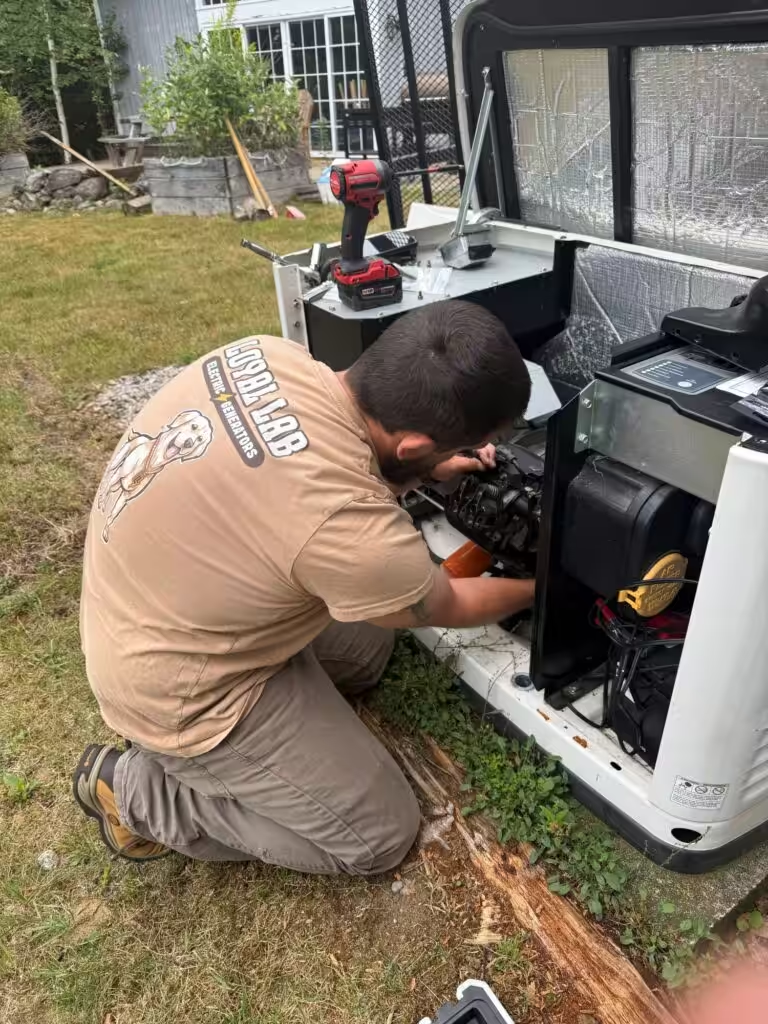
A standby generator only helps if it works on the day you need it. It starts on its own when the power drops, which is the point, but if something is wrong with the unit, a low oil condition, a fault code, a failed weekly exercise cycle, a fuel issue, nobody finds out until someone walks up to it and looks. For a Rye home that sits empty part of the year, that can be months.
Generator Watchdog is our monitoring membership. We watch your generator around the clock through Generac Fleet, and annual maintenance is included in the membership, including valve adjustments when the unit is due for them. Your generator reports to our Somersworth office and nowhere else.
Generator Watchdog: $39 per month, annual maintenance included. Setup fee of $99 to $199 applies only to older units that need additional equipment. New installs from us do not have one.
We do take on generators we did not install, and we will bring the unit back up to Loyal Lab standards first so we are monitoring something we can stand behind.
Learn more about Generator Watchdog
Every completed job donates $10, and every generator install donates $100, to local dog rescues including the Pope Memorial Humane Society in Dover. The Rusty Fund is named for Rusty, the yellow lab who inspired the company. Your generator keeps your house running; it also helps a dog find a home.

Most whole-home standby generator installations in Rye run between $8,000 and $17,500. Where you land depends on the size of the unit, the complexity of the electrical work, and site conditions like elevation requirements or the distance from the generator to the panel. Homes that need a service upgrade before the generator goes in run higher. You get one written price for the complete project before any work starts, so there are no surprises on the final invoice.
Often enough to plan for it. Rye’s exposure to Atlantic storm systems, combined with overhead lines running through wooded areas and along the marshes, means outages here come more frequently than in a lot of inland towns. Nor’easters, summer thunderstorms, hurricane remnants, and winter ice all take lines down. Most outages are restored inside a day, but a day is a long time without water if you are on a well.
Yes, as long as the unit is sized for it. Well pumps draw a large surge of current on startup, which is the load that most often gets underestimated. We include the well pump in the load calculation, along with your septic pump if you have one, so the generator handles the startup surge without nuisance shutdowns. This is one of the more common reasons we get called out to look at somebody else’s undersized install.
Yes. Generac standby units run on either natural gas or propane, and we install both. On propane we size the tank around how long you want to be covered, since run time is a function of tank size and load. We coordinate tank placement so the fill line is accessible year round and the tank meets required clearances from the house and the generator.
Most single family homes in the area are well served by an 18kW to 24kW air-cooled unit. Larger year-round homes with electric heat, multiple sub-panels, well and septic pumps, or an EV charger may need more. Smaller cottages with a limited set of essential loads can sometimes go smaller. We do a full load calculation before recommending anything, so the unit is sized for your house rather than oversized to run up the price.
Yes. Units installed within a few miles of the coast see faster corrosion on enclosure hardware and external connections than inland installs. We use corrosion-resistant hardware and Generac’s aluminum enclosure on coastal homes, and annual maintenance matters more here than it does inland. That is one of the main reasons Generator Watchdog is worth having on a Rye property.
We build a custom stand to lift the generator to the elevation the site requires. That might mean clearing base flood elevation in a designated flood zone, getting above expected storm surge for a property close to the water, or simply staying above the height that windblown spray reaches during a major storm. The height is determined by the property, not a standard bracket.
Yes. We coordinate permitting with the Town of Rye and schedule the required inspections. We also handle the coordination with your utility and your gas or propane supplier. You do not need to make those calls.
Yes to both. Generac’s standard coverage is a 5 year limited warranty, and limited means not every component is covered for the full five years. The extended 10 year warranty is a true bumper to bumper warranty with full coverage on the unit. We include the extended coverage on every generator we install at no additional cost. It is not a promotion with an end date. The coverage itself can be bought from Generac at retail by anyone; our dealer pricing is what lets us include it on every install instead of selling it as an add on.
A seasonal or part-time property is one of the strongest cases for a standby unit. A portable generator needs someone on site to start it, refuel it, and watch it. A standby unit starts on its own and runs without anyone there. Pair it with Generator Watchdog and we can tell you something is wrong at your Rye house while you are in Boston or Florida, which is the difference between a service call and a burst pipe you find months later.
Yes. We work throughout the Seacoast for generator installations, including Portsmouth, New Castle, Greenland, North Hampton, Hampton, Newington, and Stratham. If you are not sure whether your street is in our area, give us a call and we will tell you straight.
Yes. Loyal Lab Electric & Generators holds NH Master Electrician License number 13956 and Maine Electrician License number MS60021263, and carries full liability insurance and workers compensation coverage. We pull all required permits and schedule inspections on every job that needs them.
Yes for larger projects like generator installations, panel upgrades, and EV charger setups. Service calls and troubleshooting carry a service call fee, but any work needed beyond the diagnosis is quoted for free before we start.
Yes. We work with Wisetack for 0% APR financing over 12 months on qualifying generator installations, and Klarna for shorter-term options. Most homeowners can prequalify online in a few minutes without affecting their credit. Ask when we give you the quote and we will walk through what fits.
The Rusty Fund is our giving program for local dog rescues, primarily the Pope Memorial Humane Society in Dover. We donate $10 from every completed job and $100 from every generator installation. It is named after Rusty, the yellow lab the company is named for.

5.0
5.0Top Rated ServiceVerified by TrustindexTrustindex verified badge is the Universal Symbol of Trust. Only the greatest companies can get the verified badge who has a review score above 4.5, based on customer reviews over the past 12 months. Read morePosted on Google
 Karen Woodman1 days agoTroy came right away and trouble shot our issue with a burned out kitchen light. It turned out to be a bigger job than expected but he remained pleasant and completed the job in a timely manner. I would definitely called them again if I need any electrical work done.Posted on Google
 Livin'-Large7 days agoI contacted Loyal Lab about doing all the wiring in my new (detached) garage. They responded very promptly to my initial request for a quote. I met with Clay, we went over the entire scope of the job, discussed many of the details, he took notes, returned to his office, and provided a quotation that same day. I thought the quoted price was reasonable and acceptable. (I did not get a second quote, but rather based my decision on previous discussions with two other electrical contractors.) Clay's estimate of when the job would start and the duration was much better than what I had heard from other contractors in the area. The job took about half a day longer than originally expected - that was not a problem and it was reasonable. The crew that performed the work showed up at a decent hour each day, worked a full day, cleaned up at the end of each day, and they conducted themselves professionally. The crew contacted me to quickly resolve a few questions during the installation. The installation went pretty smoothly. Electrical inspections went very well. The quality of work was very good, in my opinion. All in all, my experience with Loyal Lab was much better than any other contractors (electrical or other trades) on the construction of building my new garage. The quote was sufficiently detailed, the price was acceptable, the schedule was excellent, and the results were very good. I'm happy. Yes, I would recommend talking with them for your next electrical project. [Note that Loyal Lab did not install the "service" (meter or breaker box). That was done by another electrical contractor that I would not hire to do what Loyal Lab did.]Posted on Google
 Susan Mistretta8 days agoI had several small electrical jobs that needed to be done. They were quick to respond to my initial request, came same day to issue a quote, and one week later completed the job. They know their job and I love the results.Posted on Google
 Mary Curtis14 days ago
Trustindex verifies that the original source of the review is Google.
Definitely on the expensive side, but Troy and Ben were right on time, very friendly, and took care of our light switches/ceiling fans quickly. They were so sweet to our son who had lots of questions and they even left him some stickers!!Posted on Google Jeanne Degen15 days agoTroy was On time, very professional electrician with great people skills. Reasonable price and excellent service. Highly recommend this companyPosted on Google
 James Hall16 days agoHighly recommend! Professional technician’s.Posted on Google
 J Poulin17 days agoWhat a difference going with a locally owned company. I had the Mr. Electric, Heritage, etc experience and wanted to find someone local who wasn't going to upsell, try to talk me into a service contract or try to rip me off. Troy was superb, arrived right on time and he was able to diagnose the issue in short order and made sure everything was working before leaving. The price was very reasonable and he even explained that all his work came with a one year warranty. Highly recommend and would definitely use them again.Posted on Google
 Cyn Bir23 days agoFriendly, efficient and reasonable prices. Justin came in and did the job beautifully!Posted on Google
 Matthew Rossiter27 days agoJustin and his partner(whose name I forgot, I apologize) were outstanding! They understood the work I was looking to have done, gave me a very reasonable quote, and were able to finish the project the same day. In addition, they willingly changed a very high up lightbulb in my garage for no extra charge. I will definitely be using their services in the future for any other electrical needs!Posted on Google
 Chris Hewins27 days agoTroy was exceptional today on his service call to my house. He walked me through everything as he worked, explaining what he was doing and why, giving me a real peace of mind - the insight was genuinely helpful for any future projects, as well. Quality work, clear communication and a friendly, patient approach throughout. I highly recommend Loyal Lab and we'll be calling them again for future project.


You can depend on us to for all of your electrical needs. We are here whenever you need us.

Our friendly staff are happy to help with any electrical need you have.

We use the safest and best equipment in the industry for every electrical project.

We will exceed your expectations and guarantee satisfaction.