

Your breaker panel is the distribution hub for everything electrical in your home, and like most infrastructure, it announces its problems before it fails outright. The trouble is that the announcements are easy to dismiss one at a time: a breaker trip here, a flicker there. From our shop in Somersworth, we see the same pattern across Dover, Portsmouth, Rochester, and the rest of the Seacoast: by the time homeowners call, the panel has usually been sending signals for months.
Here’s how to read those signals, which ones mean “plan an upgrade” and which mean “call today.”
The Warning Signs, In Order of Urgency
Call a licensed electrician today:
- The panel cover feels warm, or you hear buzzing or crackling from it. That’s arcing, and arcing inside a panel is an active fire risk, not a schedule-it-next-month item.
- A breaker that trips and immediately trips again when reset. That’s the system doing its one safety job; don’t keep overriding it.
- Visible corrosion inside the panel: rust, white powder, or greenish buildup on breakers or connections.
Plan an upgrade soon:
- Repeated trips on predictable combinations. If you can’t run the microwave and a space heater at the same time without a trip to the basement, your circuits are at capacity.
- Lights that dim when a large appliance kicks on. The heat pump or dryer starting shouldn’t announce itself through your light fixtures. That dip means the panel lacks headroom.
- A fuse box instead of breakers. Fuse boxes are past their era, can’t support modern loads, and make homeowners insurance harder to get at reasonable rates.
- 100-amp service with modern plans. If you’re adding an EV charger, a heat pump, or a hot tub to a 100-amp home, the math usually doesn’t work. A load calculation tells you for certain.
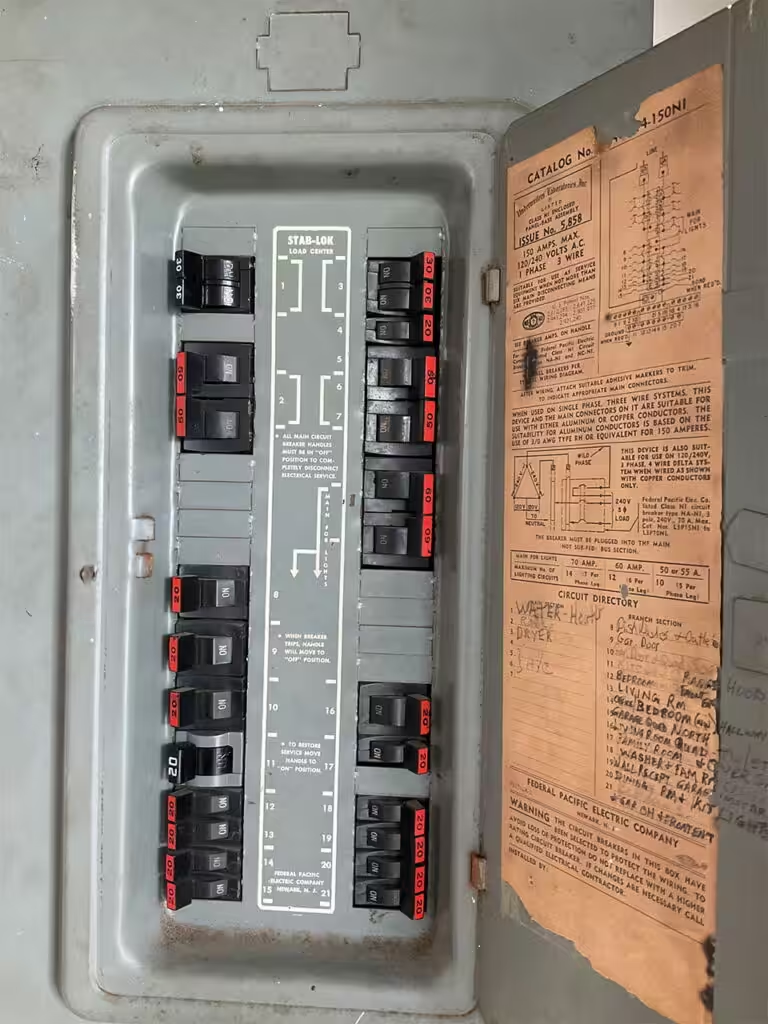
- A Federal Pacific, Zinsco, or Stab-Lok nameplate. More on these below, because they’re their own category.
Winter and Summer: The Two Annual Stress Tests
Panel problems don’t distribute evenly across the calendar. Every winter, the calls spike: the heat runs constantly, space heaters appear in bedrooms, the sun is gone by 5 p.m., and homes built for a different era of electrical demand get pushed to their limit. Many classic Seacoast homes, from Portsmouth’s Georgian Colonials to Dover’s Capes, were wired when a household’s total load was a fraction of today’s. Then summer brings the second test, when air conditioners and dehumidifiers load up circuits that just recovered from February.
If your panel only misbehaves during those peaks, that’s not reassurance. That’s the load finding the system’s ceiling twice a year, and the ceiling doesn’t rise on its own.
The Coastal Factor: Salt, Corrosion, and Surges
Living near the water adds two problems inland homes skip. Salt-laden air corrodes exterior electrical equipment, and we find pitted, corroded connections on coastal meter sockets, exterior disconnects, and panel components far more often than inland. Corrosion creates resistance, resistance creates heat, and heat is the common ancestor of most electrical failures.
The second problem arrives with the storms. When a Nor’easter takes down lines and Eversource restores power, the restoration itself can push a surge through the system hard enough to damage electronics across the house. A whole-home surge protector installed at the panel is the effective defense, and a panel upgrade is the natural moment to add one, since we’re already working in the equipment.
Federal Pacific, Zinsco, and Stab-Lok: The Panels That Skip the Line
If your panel carries one of these names, it jumps past every other sign on this list. These panels, common in homes built or renovated from the 1950s through the 1980s, have well-documented defects: their breakers can fail to trip under overload or short-circuit conditions, which means the one safety function a breaker exists to perform doesn’t happen, and wires can overheat with no shutdown. Insurance carriers increasingly recognize the risk, and an FPE or Zinsco panel can complicate coverage and home sales.
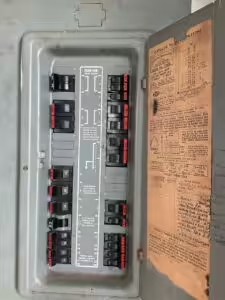
We replace these regularly across the Seacoast. If you’re not sure what you have, the manufacturer name is printed on the panel door or label, and a photo of it is enough for us to tell you what you’re dealing with.
What an Upgrade Actually Involves
A panel upgrade is more than swapping the box. Depending on your home, it can include moving from 100 to 200-amp service, replacing the meter socket and service entrance cable if they’re aged or corroded, correcting the grounding system, and adding modern AFCI and GFCI protection where code requires it. If you want to understand every piece of that system and what each part does, our guide to your home’s electrical service components walks through it. And if your symptoms sound more like a single circuit problem than a panel problem, start with our breakdown of common electrical repairs instead.
For the full picture of how we handle panel and service upgrades, including the recalled-brand replacements, see our service upgrades page.
Get a Straight Answer on Your Panel
The time to find out your panel is failing is not mid-blizzard with the grid down, and it’s not mid-heat-wave either. If your home is showing any of the signs above, call Loyal Lab Electric & Generators at (603) 605-1912. You’ll get an honest assessment, upfront pricing before any work begins, and work backed by NH Master Electrician license #13956. We serve Dover, Somersworth, Rochester, Portsmouth, and surrounding NH and Maine communities, and we’re loyal to keeping our Seacoast neighbors safe and warm.