
For most homeowners, wiring is invisible until something goes wrong. A breaker trips, an outlet dies, lights flicker, and suddenly you’re wondering what’s actually inside your walls. Around the Seacoast, from 1800s colonials in Portsmouth to mill-era homes in Somersworth and Dover to 1970s ranches in Rochester, the answer depends almost entirely on when your home was built and what’s been updated since.
That era matters more than age alone. Wiring from certain periods has specific, well-understood problems, and knowing which chapter your home belongs to tells you most of what you need to know about the risk.
The Three Wiring Eras That Cause the Most Trouble
Knob and Tube Wiring (Pre-1950s)
Common across older New England homes, knob and tube runs individual wires on ceramic knobs and through ceramic tubes. It has no ground wire, which means no real protection for modern electronics and no legitimate way to run three-prong outlets. Its cloth and rubber insulation turns brittle with age, and decades of amateur modifications or contact with blown-in attic insulation create genuine fire hazards. Active knob and tube can also complicate homeowner’s insurance and home sales, which is often the moment we get the call.
We recently replaced the knob and tube in a Portsmouth home and documented the whole project. If you want to see what this work actually looks like, that’s the honest version.
Ungrounded Two-Wire Circuits (1950s-1960s)
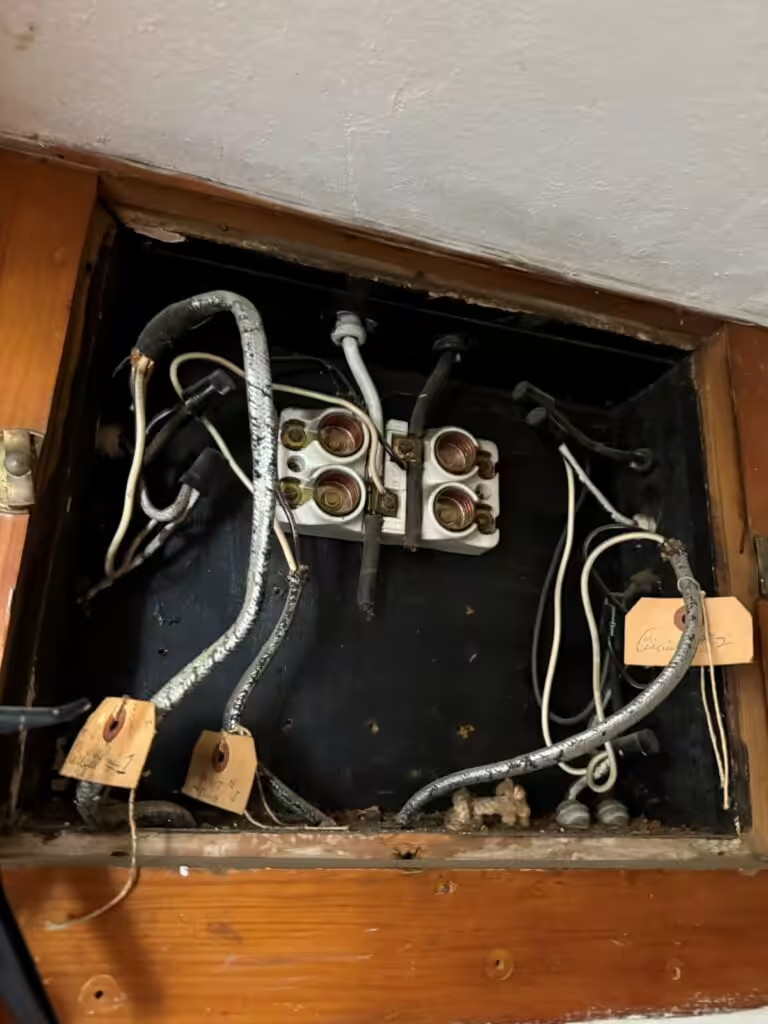
This is the era we run into most. Homes from the 50s and 60s were typically wired with early two-wire cable, often cloth-sheathed, with no ground wire. The giveaway is two-prong outlets throughout the house, or three-prong outlets that someone swapped in later without adding an actual ground behind them, which gives you the look of protection with none of the substance. The insulation on this cable gets brittle with age just like knob and tube does, and decades of connections loosening from New Hampshire’s temperature swings add heat exactly where you don’t want it: behind outlets, switches, and in junction boxes.
A quick word on aluminum wiring, since every article warns you about it: small-gauge aluminum branch wiring from the late 1960s was a real problem in parts of the country, but it barely exists in our market. In years of opening up Seacoast homes, we’ve encountered it on exactly one circuit. What you might spot is thick aluminum cable at your meter or service entrance, and that’s completely normal. Large-gauge aluminum service and feeder cable is standard, safe, and still installed today. If a national article has you worried about the aluminum you can see outside your house, that’s almost certainly not the hazard they’re describing.
The Recalled and Problem Panels (1950s-1980s)
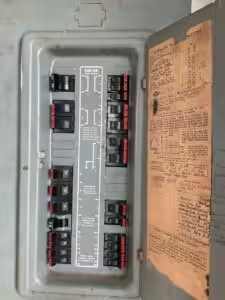
Some panels from this era, most notably Federal Pacific Electric (FPE) Stab-Lok and Zinsco, have well-documented safety defects. The core problem is the one job a breaker exists to do: trip during an overload or short. These breakers can fail to trip, letting wires overheat with no shutdown. If your panel carries the FPE, Stab-Lok, or Zinsco name, replacement isn’t a someday project. We cover what a full replacement involves on our panel and service upgrade page.
What the Coast Adds to the Equation
Living near the water introduces wear that homes twenty miles inland don’t see. Salt-laden air accelerates corrosion on exterior electrical components: service entrance cables, meter sockets, and outdoor outlets all age faster along the coast. Heavy, wet Nor’easter snow strains overhead service drops, and freeze-thaw cycles can compromise conduit seals and let moisture in where it doesn’t belong. On older coastal homes, the outside of the electrical system often needs attention before the inside does.
The Warning Signs Worth Taking Seriously
Your electrical system usually announces its problems before they become emergencies:
- Flickering or dimming lights, especially when appliances kick on
- Breakers that trip repeatedly on the same circuit
- Outlets or switch plates that feel warm, or any scorching or discoloration
- Two-prong outlets throughout the house (a sign of ungrounded, older wiring)
- A fuse box instead of breakers, or a panel that buzzes or crackles
If any of these sound familiar, our breakdown of the most common electrical repairs in NH homes covers what’s usually behind them and what fixes cost.
How Outdated Wiring Actually Gets Evaluated
Here’s the practical part. Most of the outdated wiring we find surfaces one of three ways:
During a troubleshooting visit. You call about a dead outlet or a tripping breaker, and diagnosing the symptom reveals what era the wiring behind it belongs to. That’s the most common path, and it means the evaluation happens as part of fixing the problem you already have.
During other work. A panel upgrade, a remodel, an EV charger install. Any project that opens up the electrical system gives us eyes on what’s there, and it’s the most cost-effective time to address aging wiring since we’re already in it.
During a home purchase. If a home inspector flagged knob and tube, aluminum wiring, or an FPE or Zinsco panel on a house you’re buying or selling, that’s exactly the moment to have a licensed electrician evaluate it and put a real number on the fix. We do this regularly for buyers and sellers across the Seacoast, and an accurate quote beats a scary inspection line-item every time.
Know What You’re Working With
You don’t have to rewire a house because it’s old. Plenty of older homes have been properly updated over the decades and are perfectly safe. The point is knowing which era your wiring comes from, what that era’s specific risks are, and dealing in facts instead of guesses. If your home is showing any of the warning signs above, or an inspector just handed you a report with one of the names from this post in it, call Loyal Lab Electric & Generators at 603-605-1912. You’ll get a straight answer, upfront pricing before any work begins, and work backed by NH Master Electrician license #13956. We serve Dover, Somersworth, Rochester, Portsmouth, and surrounding NH and Maine communities.