

A customer up in the Lakes Region called me a couple of days after agreeing to a generator installation. He had been doing some research and found the same Generac unit we were planning to install online for around $6,700. Our quote was just over $17,000 including the gas line work. He wanted to understand why the gap was so wide.
“There is no way there is $10,000 in labor,” he said. “That seems crazy.”
He was right that it was not $10,000 in labor. But he was looking at a $6,700 number and assuming everything else was simple. It is not. What follows is a breakdown of every line item on that job and every trip it took to finish. If you are sitting with a generator quote in front of you and asking yourself the same thing, you deserve a straight answer.
Why Is the Generator So Much Cheaper Online Than What You Pay Installed?
The generator unit is one piece of a much larger job. When you find a Generac 22kW listed for $6,700 on a retail site, that number covers the generator itself, and sometimes a transfer switch. It does not cover the rest of the material or the skilled labor it takes to get that unit installed, wired in, and running at your house, let alone permitted, inspected, and warrantied. That gap is where everything else lives.
On this job, the unit was roughly $6,500. The total installed price with gas was just over $17,000. Here is where the rest of that went. Keep in mind that every property is different, so the exact numbers shift from one job to the next. This was one real job, not a fixed price list.
What Is Included in a Generator Installation Besides the Unit?
More than most people expect, and the list gets longer on rural properties and new builds.
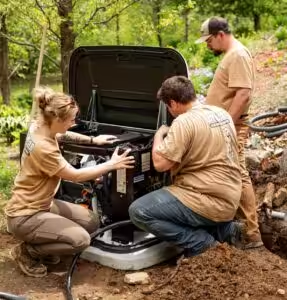
The Next-Gen Generac unit requires a battery, around $130. It needs a pad to sit on, either a composite Genpad or a precast concrete pad. If the ground is not level, you may need crushed stone and framing to level the pad correctly. In some cases that means pressure-treated timbers or rough-cut posts to build a containment box. Not every job needs all of this, but many do.
Then there is the wiring. Generator cable, which carries both the control signal and the power in one run, costs a few dollars per foot. A typical install uses 20 to 40 feet. This job needed 80 feet because of where the generator had to be placed. That cable needs supports and connectors along the way, and where it transitions from underground to above ground, you need conduit, PVC fittings, and liquid-tight flex into the generator. On this job we used inch-and-a-half flex. The fittings on their own are not much, but once you add up the conduit, junction boxes, connectors, and splicing material, that can run a couple hundred dollars on a single job. Local codes sometimes require a dedicated outdoor disconnect on the exterior of the house, which can add another couple hundred dollars depending on the type.
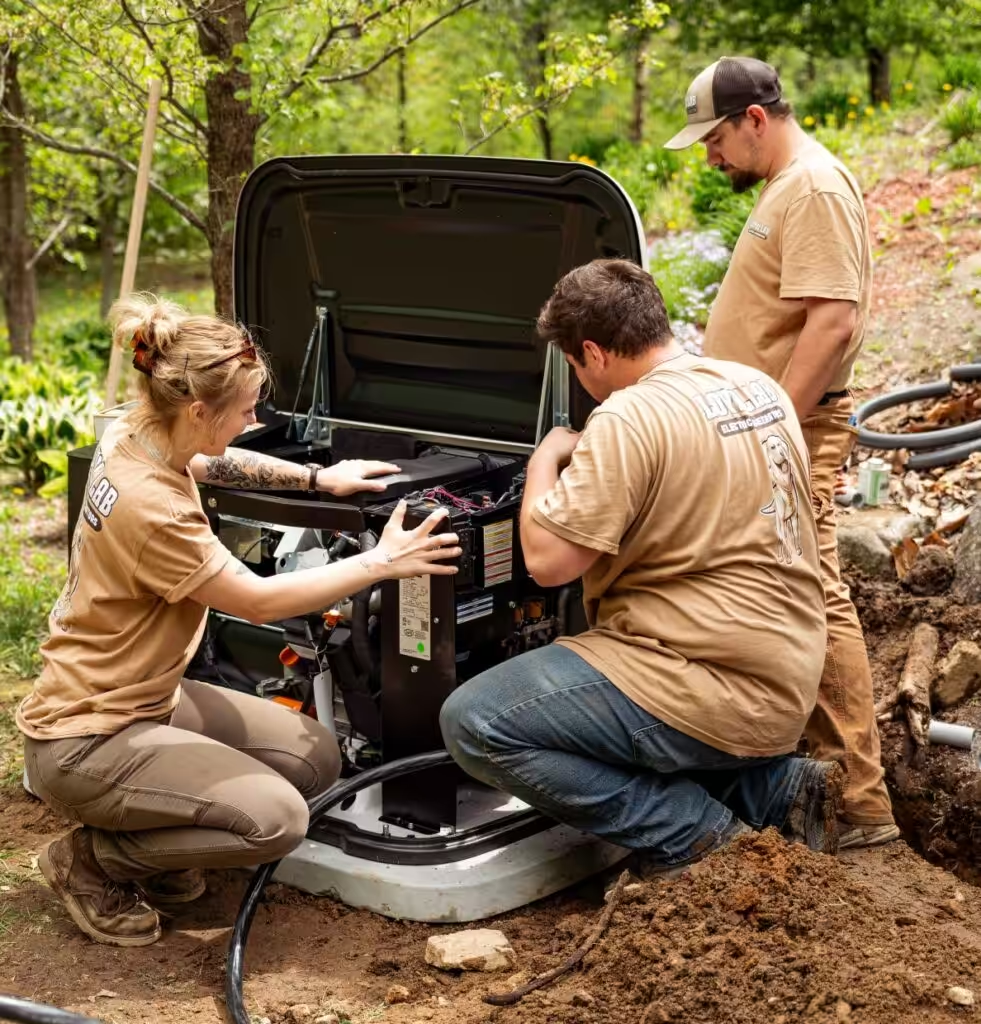
We also dug a trench on this job, 18 inches deep, entirely by hand. Digging it took two electricians on its own. That is real time and real labor, and it does not show up in the price of the unit.
How Many Times Does an Electrician Have to Come Out to Install a Generator?
Five times on this job. That number surprises most customers, but it is not padding. Each trip was necessary.
Trip one was the estimate. We went out to the property, walked it, sized the generator for the home’s load, located the best spot for the unit, and mapped out where the transfer switch would go and how the cable would run. That was a couple of hours on-site plus time to build the quote. Depending on how you found us, that visit already had a cost attached before you decided anything. If you found us through a site like Angi or HomeAdvisor, getting connected with you can cost us $75 to $100, whether or not you ever hire us.
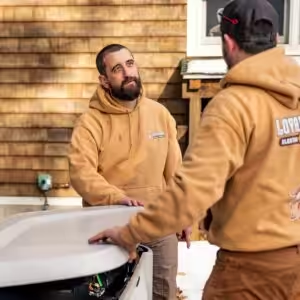
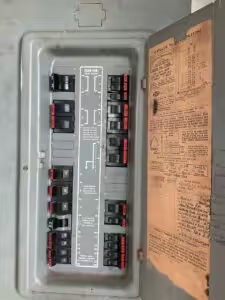
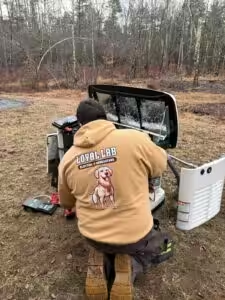
Trip two was installation day. We usually put at least three team members on site for this, two working outside on the unit and the pad and one inside installing the transfer switch. Running it that way lets us get the whole electrical side done in a single day with the least disruption to your routine. By the end of that day the pad was set, the trench was dug, the transfer switch was in, and all the electrical was run, terminated, and ready for the gas work.
Trip three was coordinating the gas. Gas line work is its own licensed trade, separate from electrical, so we bring in a vetted, licensed gas contractor we have worked with for years. They design and install the propane or natural gas line. We lay the job out with them, meet them on-site, pay for their work upfront, and oversee the whole thing so it ties into the rest of the install correctly. Their portion on a job like this runs a couple thousand dollars, and because the entire job falls under our warranty, we stay present and accountable for it.
Trip four was the inspection. We coordinated with the town inspector, who came out to check the electrical and the gas work. In this case we were able to backfill the trench and run the first generator test on the same trip. The customer was at work, so we handled it and reported back.
Trip five was the customer walkthrough. We went back out specifically so the homeowner could be there. We walked through everything they need to know: how the transfer switch works, what to expect during an outage, how to reset fault codes, what maintenance is required and when, and how to monitor the system. Then we tested the generator under load so they could see exactly what happens when the power goes out, before they ever need to rely on it.
That is five site visits for one job, plus a separate run to the town hall to pull the permit, which in a lot of towns still has to be done in person.
Can You Finance a Generator Installation?
Yes. We offer financing through Wisetack, including low-interest and 0% options, because a whole-home generator is a significant purchase even for homeowners who have the cash on hand. A lot of people would rather keep their savings where they are and pay over time, and that is a completely reasonable way to handle it.
Offering financing does cost us something behind the scenes. We pay a processing fee on it, the same way any business pays a fee when you swipe a card, and in some cases a fee just to make the program available. That is part of running the business the right way, not a charge we tack onto your quote. We would rather give you the option than not.
What Does a Generator Warranty Actually Cover, and Why Does It Matter?
The standard five-year limited warranty that comes with a Generac is not as strong as it sounds. Read the fine print and you will find roughly two years of real coverage, followed by a couple of years of parts-only coverage, then one year covering only major components like the engine. What you are left with is limited protection during the years a generator is most likely to need attention.
Every Loyal Lab generator installation includes a 10-year extended warranty on the unit through Generac. That one is backed by the manufacturer, so it protects the equipment itself for a full decade no matter who you call to service it down the road.
On top of that, we add our own lifetime craftsmanship guarantee. That covers the installation work we did, our wiring, our connections, our pad and trench, for as long as you live in the home.
Here is the part that matters most when you are comparing quotes. The factory warranty is on the equipment, but our craftsmanship guarantee is only as good as the company standing behind it. A guarantee on the installation work means nothing if the contractor who made it is gone in a couple years. We are approaching our 10th year in business. That is not a common milestone for a small electrical contractor. The failure rate is high, and most do not make it five years. We plan on being around to honor every guarantee we write, and the only way to do that is to be priced correctly.
Why Are Some Generator Installers So Much Cheaper?
Two reasons, and neither one is good for you long-term.
The first is that they are not priced right. A contractor who bids a $10,000 generator job that actually costs $12,000 to do properly is burning through margin on every install. That kind of operation either cuts corners or does not stay in business, and a craftsmanship guarantee from a company that closes in three years is worth nothing.
The second is that they are saving somewhere you may not notice until later. That might mean fewer site visits, no permit, a smaller or less experienced crew, a cheaper installation method, or employees who are not paid well enough to stick around and do careful work. We pay our people well because good employees produce good installations. That is not charity, it is how you build a team that customers can actually count on.
So What Did That Customer Actually Pay For?
A Next-Gen Generac unit sized for his home. A correctly leveled pad. Eighty feet of generator cable through a properly trenched and inspected run. A 200-amp automatic transfer switch. All the conduit, fittings, connectors, junction boxes, and splicing material that go with it. A coordinated gas line installation by a licensed gas contractor, paid upfront and covered under our warranty. Five site visits from a crew of master, journeyman, and apprentice electricians who are certified Generac installation technicians. A pulled permit and a passed inspection. A full customer walkthrough and load test. A 10-year extended factory warranty through Generac. And a lifetime craftsmanship guarantee from a company built to be around long enough to honor it.
At $17,000, that is not $10,000 in labor. It is everything it takes to do the job right.
If you are anywhere in New Hampshire’s Seacoast or Lakes Region and getting quotes on a whole-home generator, we are happy to walk you through what is in our price before you sign anything. Call us at (603) 634-8610 or get a quote at loyallabelectric.com.