

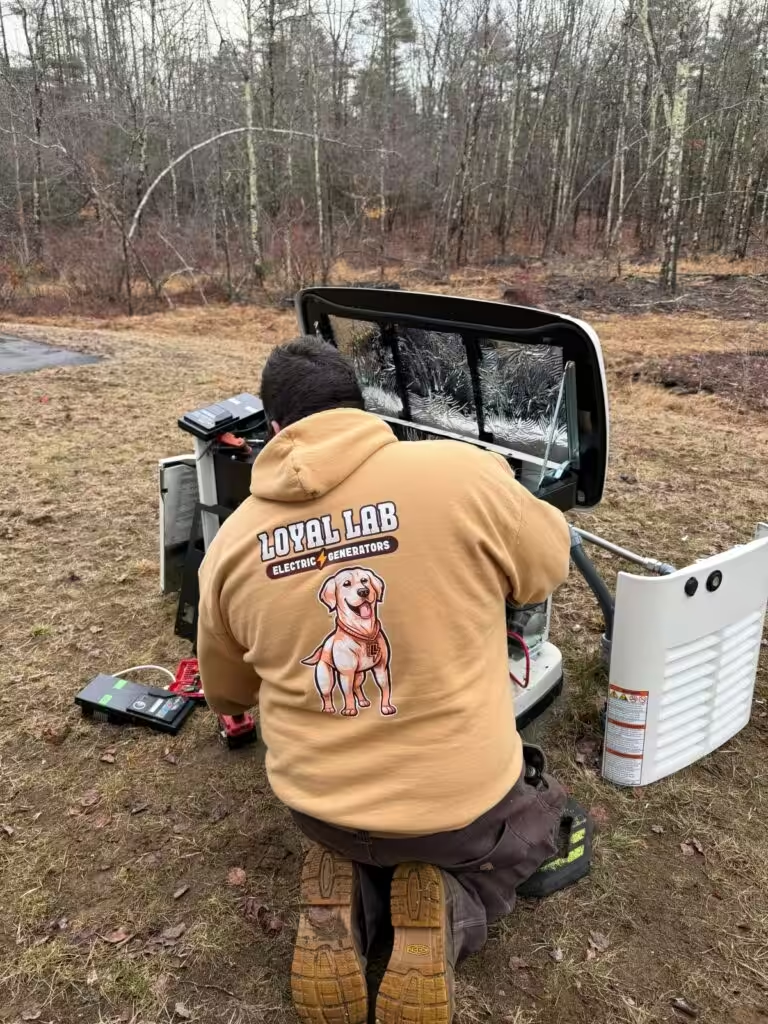
The Five Failure Points That Silence Strafford County Generators
From our shop on NH-108 in Somersworth, we get the same calls every time a Nor’easter spins up the coast. A homeowner in Dover flips a light switch out of habit, but the standby generator they invested thousands in stays silent. A family in Rochester is facing a weekend without power over a detail nobody noticed back in October.
Power outages in Strafford County are not a surprise. What surprises people is how often a generator that should be ready fails to start. When we respond to these calls, the cause almost always traces back to one of five points.
More Than Just Weather: Why the Seacoast Grid Is Uniquely Vulnerable
New Hampshire’s grid is tested by more than ice and snow. Older electrical infrastructure, particularly in mill towns like Somersworth and the colonial-era neighborhoods of Portsmouth, was never designed for modern demand. Add salt-laden coastal air that accelerates corrosion and heavy, wet snow loading the pines along the Spaulding Turnpike, and outages become a matter of when, not whether your equipment is ready for them.
Homes built before the 1980s are often fed by overhead lines vulnerable to falling limbs. Persistent damp, salty air compromises connections on the grid and on your own equipment, something we see on generator calls from Portsmouth down to Hampton. And peak summer air conditioning load strains substations engineered decades ago, which is why outage risk here is a year-round concern, not just a winter one.
A Pre-Winter Checklist from Our Licensed Electricians
1. The Exercise Cycle: Is It Actually Running?
Current Generac and Kohler units run a short automatic self-test on a set schedule, weekly on most models and biweekly on some newer ones. That cycle exists for exactly one reason: to prove the unit is ready before it is needed.
Here is the pattern we see constantly. A storm rolls in, the power drops, and the generator never starts. Sometimes the cause is a real failure, like a bad starter or controller. Sometimes it is a nuisance issue, like a gas regulator iced over. Either way, when we arrive and pull up the run log, the story is usually the same: the unit stopped exercising several cycles ago and nobody noticed. Every one of those missed cycles was a warning that went unheard.
The Field Check: Know your unit’s exercise schedule and step outside during a cycle at least once a month to confirm it actually runs, not just clicks. A healthy cycle sounds smooth and consistent. If you own a portable unit, run it for 20 minutes with a light load to circulate oil. And if monitoring exercise cycles yourself is not realistic, this is exactly what our Generator Watchdog program exists for. We watch your unit’s exercise and fault reports remotely and reach out when a cycle is missed, so the first sign of trouble is a phone call from us instead of a silent generator during a storm.
Watch our video explaining the Watchdog program
2. The Battery: The Single Most Common Point of Failure
Generac recommends replacing the starting battery every 3 to 5 years. We have seen batteries last well past five, but lasting is not the same as being ready. A battery that starts the unit fine on a mild September afternoon can fall flat when it is 10 below in Wakefield during a January storm, because cold can cut a battery’s cranking power roughly in half.
Corrosion is the other killer, especially near the coast. Salt air builds that chalky crust on terminals faster than people expect, and a corroded connection does more than stop the trickle charger from maintaining the battery. It will often prevent the unit from starting at all, even with a healthy battery behind it.
The Field Check: Before the first frost, inspect the terminals for corrosion and clean any buildup. If your battery is past its third winter, have it load tested rather than trusting how it looks. We load test every battery during our annual maintenance visits, because a battery that passes a voltage check can still fail under cranking load in the cold.
3. Fuel: Stale Gas, Moisture, and Frozen Regulators
Gasoline does not turn to varnish overnight, but portable generators often sit untouched from spring cleanup until the first winter storm, and that is long enough to cause trouble. Today’s ethanol-blended gas pulls moisture out of the air as it sits. The first symptom is hard starting or no starting at all. Left long enough, degraded fuel will eventually clog the carburetor, but the moisture problem shows up well before any gumming does.
Standby units running on propane or natural gas do not have stale fuel to worry about, but the regulator can still take the whole system down. The orifice that meters gas through a regulator is tiny. A small amount of moisture inside it that freezes during a cold snap is enough to starve the engine, and a regulator buried under drifted snow and ice is one of the most common no-start calls we run after a storm.
The Field Check: For portables, use fresh fuel with a quality stabilizer, and if the unit sat all summer on old gas, drain and refill it before storm season instead of hoping it starts. For standby units, keep the regulator and fuel connections clear of snow and ice all winter, check your propane level after any extended outage, and schedule a refill when it drops below 50%. Remote fuel level monitoring is available through our Generator Watchdog program and from many fuel providers, so a low tank never has to be a surprise.
4. The Transfer Switch: The Unseen Brains of Your System
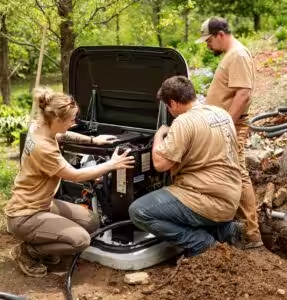
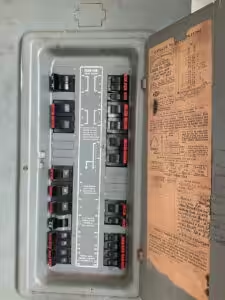
The Automatic Transfer Switch is what isolates your home from the grid and signals the generator to start. It is full of sensitive electronics and mechanical contacts, and on exterior-mounted units the most common problems we find are corrosion and water intrusion, especially when the switch was not installed or sealed properly in the first place. We have even found ants nesting inside older Generac controllers. Warm electronics attract more than you would think.
The Field Check: This is not a DIY item. The only safe way to verify transfer switch function is a professional test where a licensed electrician simulates a power failure and confirms the switch operates and the generator picks up the load as designed. We include this verification in annual generator service.
5. Airflow and Exhaust: A Costly Shutdown from a Simple Mistake
Generators need to breathe. Drifting snow, overgrown shrubs, or piled-up autumn leaves can block the air intake or exhaust, causing the unit to overheat and shut down right when it is working hardest.
The Field Check: Maintain a five-foot clear zone around your generator at all times. After a heavy snowfall, make shoveling out the generator as high a priority as clearing your front steps.
Our Local Commitment: The Rusty Fund
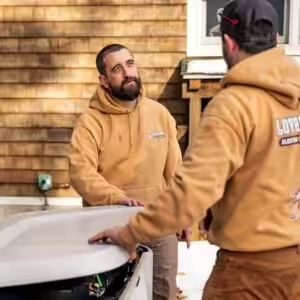
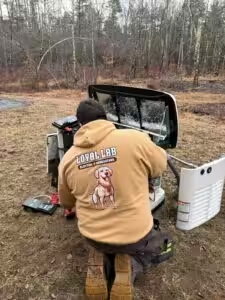
We are an owner-operated team of electricians living and working on the Seacoast, and our company is named for Rusty, our owner Eric Hope’s yellow lab. In his honor, The Rusty Fund donates from every completed job to the Pope Memorial Humane Society in Dover. The work keeps the lights on. The fund is how we put some of that back into the community that trusts us with it.
Ready Before the Storm, Not During It
Do not wait for the wind to find out where your system stands. We install, service, and maintain generators across Strafford County, the Seacoast, and the Lakes Region from our Somersworth headquarters. An annual maintenance visit covers every failure point on this list: battery load test, fuel and regulator check, transfer switch verification, and a full readiness review, with upfront pricing before any work begins. If you want your generator watched year-round, ask about Generator Watchdog remote monitoring and let us catch the missed exercise cycle before the storm does.
Call Loyal Lab Electric & Generators at (603) 605-1912. Every job is backed by NH Master Electrician license #13956.