

By Loyal Lab Electric & Generators – Serving Somersworth, NH and Surrounding Communities
When a storm hits Somersworth, NH, and the power goes out, your generator becomes the unsung hero of your home. But here’s the truth: many homeowners don’t realize: a generator is only as reliable as the maintenance it receives.
At Loyal Lab Electric & Generators, we believe that peace of mind doesn’t come from just owning a generator—it comes from knowing it’s ready to run when you need it most.
The Problem: Generators Don’t Maintain Themselves
We’ve seen it too many times. A homeowner installs a generator, feels secure, and then… forgets about it. Fast forward to the next Nor’easter —and the generator won’t start. The oil’s old. The battery is dead. Or worse, a small issue that could’ve been prevented has turned into a costly repair.
You deserve better than that.
You invested in a generator to protect your home, your family, and your comfort. Let’s make sure it delivers when the moment comes.
Step 1: Run Your Generator Regularly
Just like a car sitting too long in the driveway, a generator needs regular exercise. If it’s a standby generator, it may already have a weekly self-test mode. If it’s portable, aim to run it for about 20–30 minutes once a month.
Why it matters:
- Keeps fluids circulating
- Prevents battery drain
- Helps you detect problems early
Pro tip: Listen while it runs. Does it sound rough? Does it start slowly? These are early warning signs. Catch them now—avoid surprises later.
Step 2: Change the Oil and Filters
Generator engines work hard. Oil gets dirty. Air filters clog. Fuel filters degrade. Neglecting them can shorten the lifespan of your generator significantly.
General guidelines:
- Oil: Change after the first 20–30 hours (brand-new unit), then every 100 hours or annually.
- Air filter: Check every 50 hours, replace as needed.
- Spark plugs: Inspect annually, replace every 100–200 hours.
- Fuel filter: Replace every 200–250 hours.
Note: These are general rules—always refer to the manufacturer’s manual or talk to a pro at Loyal Lab Electric & Generators for specifics.
Step 3: Inspect the Battery
If your generator has a battery (most whole-home systems do), it’s a key part of the startup process.
Maintenance tips:
- Check terminals for corrosion
- Ensure tight, clean connections
- Test voltage regularly
- Replace every 2–3 years
A bad battery = no startup. And nobody wants to figure that out in a snowstorm.
Step 4: Keep It Clean and Covered
Your generator lives outside, especially in New Hampshire’s harsh weather. Snow, sleet, leaves, and dust can build up fast.
- Clean the exterior regularly with a damp cloth (no pressure washers).
- Clear snow and debris after storms.
- Check for pest nests—mice love warm, dry spaces.
If you don’t have a weather-rated cover or housing, let us help. A protective enclosure can add years to your generator’s life.
Step 5: Monitor Fuel Supply
Generators can run on natural gas, propane, or diesel. Each has its own quirks:
- Natural gas: Low-maintenance, but ensure your line is in good condition and pressure is consistent.
- Propane: Check tank levels and valves. Top off before a major storm.
- Diesel: Fuel degrades over time—use stabilizers and rotate supply.
Don’t wait until a storm warning to find out you’re low on fuel.
Step 6: Schedule Annual Professional Maintenance
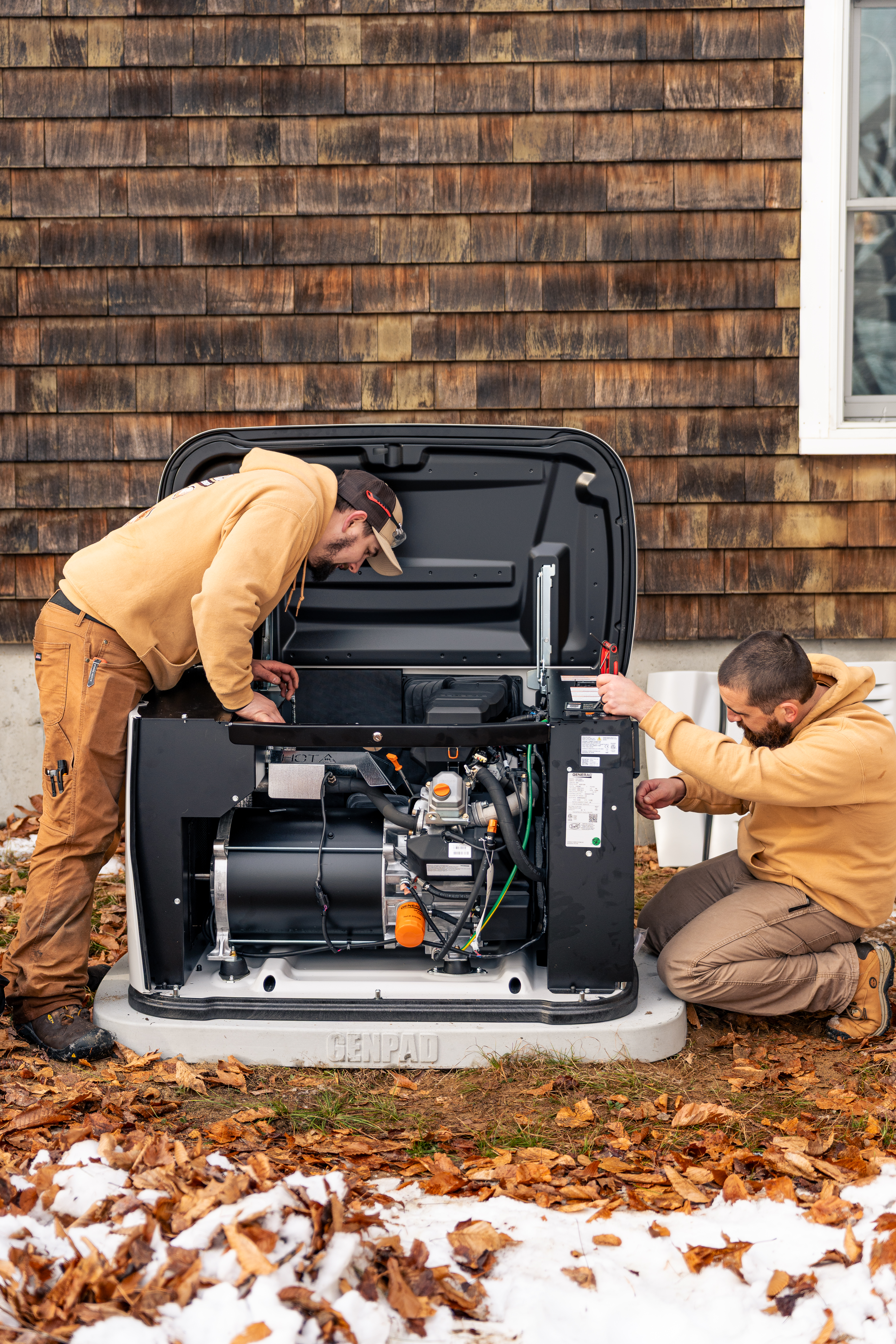
Even with diligent self-care, nothing replaces a professional inspection. At Loyal Lab Electric & Generators, we offer affordable annual generator maintenance plans that cover everything from fluid checks to load testing.
Our comprehensive service includes:
- Full inspection and diagnostics
- Oil and filter changes
- Battery testing and replacement (if needed)
- Load simulation to ensure full power capability
This isn’t just a tune-up. It’s a stress test for your generator’s reliability.
Step 7: Keep a Log
It may sound simple, but keeping a maintenance log makes a huge difference. Record:
- Run times
- Oil changes
- Filter replacements
- Service appointments
- Notable performance issues
This helps you track trends, comply with warranties, and catch problems early.
Your Plan for Peace of Mind
When you partner with Loyal Lab Electric & Generators, you’re not just getting an installation—you’re getting a long-term partner in home protection. We’ve helped countless homeowners across Somersworth and the Seacoast region stay powered through blizzards, blackouts, and everything in between.
Here’s what we recommend:
- Follow a simple monthly and seasonal maintenance checklist
- Call us annually (or semi-annually for heavy-use generators)
- Ask about our Generator Maintenance Memberships for automatic reminders and priority service
Don’t Let Your Generator Become a Paperweight
You bought your generator for security and confidence. Don’t let neglect turn that investment into a risk.
If you want it to start every time and power your home seamlessly, give it the care it deserves.
Need help? We’re here.
Loyal Lab Electric & Generators—Powering Peace of Mind, One Home at a Time.